اسم الكاتب: Consulting Team

نموذج تقييم RICE لتحديد أولويات المنتجات

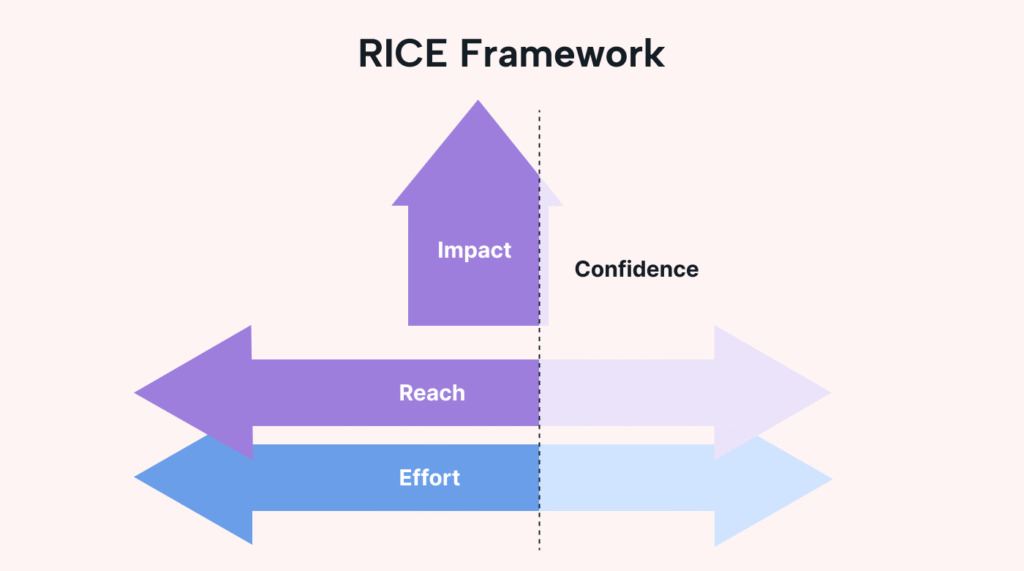
ما هو نموذج تقييم RICE؟ نموذج تقييم RICE هو إطار عمل يساعد في اتخاذ قرارات استراتيجية بشأن أولويات تطوير المنتجات. تم تطويره بواسطة فريق المنتجات في شركة Intercom، وهو يجمع بين أربعة معايير رئيسية لتقييم كل فكرة أو مبادرة: هذا النموذج يُستخدم بكثرة في فرق إدارة المنتجات لتقليل التحيزات الشخصية، وتوفير مبررات منطقية لاتخاذ القرار أمام أصحاب المصلحة، وللتعامل مع الأفكار الكثيرة التي تتنافس على الموارد. نبذة تاريخية: كيف نشأ نموذج RICE؟ تم تطوير النموذج داخليًا في شركة Intercom بعد مواجهة صعوبات في اختيار الأولويات ضمن مجموعة واسعة من المشاريع المتنافسة. الفريق جرّب نماذج أخرى مثل: لكن كل هذه النماذج لم تكن كافية لتلبية احتياجات الفريق. فابتكروا نموذجًا رقميًا يُحوّل المقارنة بين الأفكار إلى معادلة حسابية واحدة تتيح تصنيف كل مبادرة بشكل موضوعي. المعادلة الأساسية لنموذج RICE المعادلة بسيطة: RICE Score = (Reach × Impact × Confidence) / Effort كل متغير يُقاس بشكل رقمي نسبيًا، والنتيجة هي درجة يمكن استخدامها لترتيب الأفكار أو الميزات من الأعلى إلى الأدنى حسب الأولوية. تفصيل عناصر نموذج RICE يشير إلى عدد الأشخاص الذين سيتأثرون بهذه المبادرة خلال فترة محددة. يمكن قياسه بـ: مثال: إذا كنت تتوقع أن يجرب 400 مستخدم ميزة جديدة خلال شهر، فإن قيمة الوصول = 400. يُقيَّم حسب التأثير المتوقع للمبادرة على تجربة المستخدم أو على مؤشرات الأداء الرئيسية (KPIs).نظام Intercom يقيّم التأثير بناءً على مقياس من خمس درجات: الدرجة التقييم 3 تأثير ضخم 2 تأثير عالي 1 تأثير متوسط 0.5 تأثير منخفض 0.25 تأثير ضئيل مثال: ميزة من المتوقع أن تؤدي إلى زيادة معدل التحويل بنسبة كبيرة يمكن أن تحصل على 2 أو 3. تمثل مدى الثقة في صحة التقديرات الخاصة بالوصول والتأثير. وهي مهمة لتجنب إعطاء وزن كبير للأفكار المبنية على الحدس دون بيانات. الدرجة التقييم 100% ثقة عالية 80% ثقة متوسطة 50% ثقة منخفضة نصيحة: إذا كانت الثقة أقل من 50%، يجب التفكير في تأجيل المشروع أو طلب مزيد من البحث. يمثل كمية الموارد المطلوبة لتنفيذ المبادرة. غالبًا ما يُقاس بوحدة “شهور العمل الفردي” (Person-months).يتضمن الجهد: مثال: إذا كان مشروع يتطلب شهرين من العمل المشترك بين فريق التصميم والهندسة، فإن قيمة الجهد = 2. أمثلة تطبيقية على استخدام RICE Initiative Reach Impact Confidence Effort RICE Score إطلاق ميزة دردشة فورية 800 2 80% 4 320 تحسين تجربة تسجيل الدخول 300 1 90% 1.5 180 إعادة تصميم الصفحة الرئيسية 1000 3 70% 6 350 ملاحظة: هذه الأرقام تقديرية وتُستخدم فقط لغرض التوضيح. فوائد نموذج RICE

نموذج تقييم RICE لتحديد أولويات المنتجات قراءة المزيد »

Introducing BLAST

Introducing BLAST: Build. Launch. Accelerate. Scale. Transform. At Intelegic, we’re always innovating to help businesses accelerate their digital transformation. Today, we’re thrilled to announce the launch of our latest offering: BLAST – a comprehensive framework designed to help businesses Build, Launch, Accelerate, Scale, and Transform their digital products with AI-driven insights, state-of-the-art development, and seamless deployment. What is BLAST? BLAST stands for Build, Launch, Accelerate, Scale, and Transform. It’s our unique approach to digital transformation that brings together the best of AI-powered business analysis, Flutter-based development, and strategic deployment to help your business succeed at every stage of the product lifecycle. The BLAST Framework Explained 1. Build The foundation of any successful digital product starts with a solid build. BLAST enables businesses to create cutting-edge solutions by leveraging AI and data-driven analysis. From gathering key insights to developing a comprehensive product roadmap, we ensure that your digital project is built on a foundation of deep business understanding and technology expertise. 2. Launch Once your product is built, it’s time to launch. With BLAST, we streamline the process of going live, ensuring that your product reaches your users quickly and smoothly. Our Flutter-based development ensures your mobile and web apps are optimized for performance, cross-platform compatibility, and a seamless user experience. We also handle deployment automation to minimize errors and ensure a flawless release. 3. Accelerate With the launch behind you, the next step is to accelerate growth. BLAST includes AI-powered analytics that continually analyze customer behavior, business performance, and market trends. These insights allow you to make data-driven decisions to refine your strategy, enhance the user experience, and rapidly iterate on your product. 4. Scale As your business grows, you need a system that can scale with it. BLAST is designed to grow with your business, providing scalable solutions that handle increased user traffic, expanded feature sets, and more complex data. Whether you’re scaling infrastructure or fine-tuning workflows, we ensure your digital product can handle high volumes without compromising performance. 5. Transform Finally, transform your business through continuous improvement. With BLAST, you not only have a product that scales but also a solution that adapts to new business needs and market shifts. By combining AI, analysis, and agile development processes, BLAST ensures your product stays relevant, innovative, and future-proof. Why Choose BLAST by Intelegic? Intelegic’s BLAST is a game-changer for businesses looking to streamline their digital transformation journey. Here’s why BLAST stands out: The Future of Digital Transformation At Intelegic, we understand that digital transformation is a continuous journey. BLAST provides a comprehensive, flexible solution that helps you succeed at every stage — from initial build to ongoing transformation. As we continue to innovate and improve our offerings, we’re committed to helping businesses like yours navigate and thrive in an ever-evolving digital landscape. Get Started with BLAST Today Ready to accelerate your digital journey? BLAST is here to help you Build, Launch, Accelerate, Scale, and Transform your digital products. Reach out to the Intelegic team today to learn more about how BLAST can help your business succeed in the digital age.

Introducing BLAST قراءة المزيد »

TRIZ Method A Systematic Approach to Problem-Solving

In the fast-paced world of business analysis, professionals are constantly faced with complx problems that require innovative solutions. While traditional problem-solving methods often rely on brainstorming and trial-and-error, a more structured approach can significantly enhance efficiency and effectiveness. This is where the TRIZ (Theory of Inventive Problem Solving) method comes into play. What is TRIZ? TRIZ, developed by Russian scientist Genrich Altshuller in the mid-20th century, is a methodology that helps systematically identify and resolve contradictions in problem-solving. Unlike traditional approaches that depend on intuition or past experiences, TRIZ relies on a knowledge base of patterns and principles derived from analyzing thousands of successful innovations across industries. Why Use TRIZ in Business Analysis? Business analysts (BAs) deal with a wide range of challenges, from process optimization to stakeholder alignment and software development. TRIZ can be an invaluable tool in their arsenal for the following reasons: How to Apply TRIZ in Business Analysis 1. Identify the Problem and Contradictions In TRIZ, every problem is seen as a system with contradictions. For example, a company may want to increase customer service speed while reducing operational costs. These two goals seem contradictory, but TRIZ provides tools to resolve such conflicts. 2. Use the 40 TRIZ Principles TRIZ offers a set of 40 inventive principles that help overcome contradictions. Some commonly used principles in business analysis include: 3. Apply the Contradiction Matrix The TRIZ Contradiction Matrix is a powerful tool that matches specific contradictions with applicable inventive principles. Business analysts can use this matrix to systematically find solutions to challenges that involve conflicting requirements. 4. Consider the 9 Windows Framework The 9 Windows Framework in TRIZ encourages looking at problems across time (past, present, future) and space (system, subsystem, supersystem). This broader perspective helps BAs understand the root cause of issues and anticipate future impacts. 5. Implement and Test the Solution Once a TRIZ-based solution is identified, business analysts should collaborate with stakeholders to validate and refine it. Using prototyping, simulations, or pilot projects can help ensure successful implementation. Real-World Example: TRIZ in Process Optimization Consider a company struggling with high employee workload due to increased customer inquiries. The contradiction is: In today’s fast-paced business landscape, analytical challenges are becoming more complex, requiring structured and innovative solutions. TRIZ provides business analysts with a powerful, systematic approach to overcoming contradictions, streamlining processes, and fostering breakthrough ideas. By leveraging its principles, analysts can move beyond trial and error, uncovering optimal solutions that drive efficiency and competitive advantage. Whether optimizing workflows, refining strategic decisions, or reimagining product development, TRIZ serves as a roadmap for structured creativity.

TRIZ Method A Systematic Approach to Problem-Solving قراءة المزيد »

arالعربية
Scroll to Top